
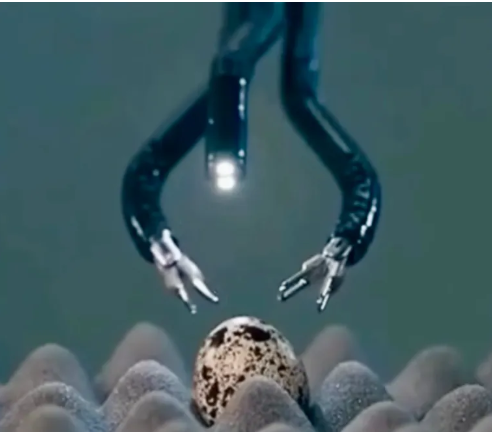
A surgical robot is not inherently more precise than a surgeon—rather, it extends and refines what experienced hands can achieve. Last week, a LinkedIn debate asked whether robots are superior in dexterity and precision, but with wrong premises the discussion evolved around patient safety. The viral video at its center features a surgical robot opening a quail egg, intervening in the yolk, and sealing it with impressive millimetric accuracy—an eye-catching claim of robotic mastery. Yet, in reality, this demonstration involves a telemanipulated system: a surgeon is at the controls, not a real autonomous robot.
The Truth Behind Surgical Robotics
Today’s soft tissue surgical robots—regardless of brand—are sophisticated extensions of the surgeon’s skill, enabling micro-motions, enhanced tremor filtering, and refined movement through tight spaces.
The “robot” does not independently make clinical decisions, adapt to unexpected anatomy, or operate autonomously. Every maneuver is controlled in real time by the surgeon’s hands at a console. Remember the theoretical path towards autonomous surgery.
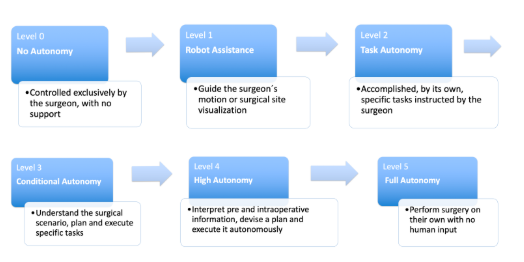
The theoretical framework for autonomous robotic surgery has existed for over four decades. But for soft tissue robotics we are still in level 0 with chips of level 1.
Exciting videos showing extreme dexterity are demonstrations of human-robot collaboration, not a contest between man and machine.
Human judgment, adaptability, and complex problem-solving are not yet replicable by machines in real clinical scenarios.
Towards Autonomous Surgery
Research into autonomous robotic surgery is advancing, with some systems automating repetitive steps—like suturing or camera alignment using AI and image guidance.
Complete autonomous procedures, however, remain experimental. Human judgment, adaptability, and complex problem-solving are not yet replicable by machines in real clinical scenarios.
Most experts agree that, while surgical robots will continue to “robotize” surgery, a fully automated operation is still years away.
A Shifting Landscape
With new robotic systems routinely launching, surgical procedures are increasingly “robot-assisted”—leveraging technology for improved access and control, yet fundamentally dependent on surgical expertise.
Robots amplify human potential. Precision is enhanced, but not independent of the person controlling the system. Every new device exemplifies these trends. Let´s take Shurui: advanced mechanical design, enhanced workspace ergonomics, flexible “snake-like” instruments, and outstanding visualization. It is a powerful extension of the surgeon’s skill—not a replacement.
In summary: surgical robots are tools of precision, but their greatest strength is in the hands of skilled surgeons. Autonomy is evolving—but, for now, true surgical expertise remains human-driven.
J Granell. September 14, 2025.