
WELCOME TO HEAD & NECK ROBOTIC SURGERY
Advancing minimally invasive surgery with cutting-edge robotic systems for safer, faster, and more effective treatments.
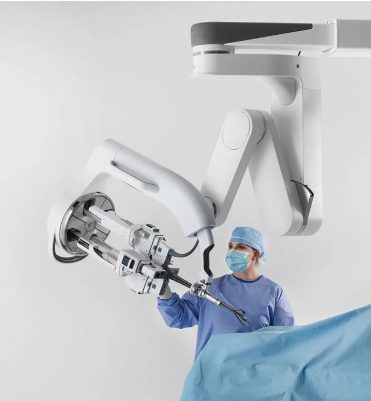
I came across an interesting presentation by Dwight Meglan, an American engineer and entrepreneur: an update on Surgical Robotics. Yes, all information is derived from publicly available sources, but you might find some difficult to find. So, there it is. Thanks.
As that is an engineer’s point of view, I would like to add my surgeon’s point of view. This post is prompted by a disagreement with the slide devoted to Otolaryngology. I will explain.
How do we classify surgical robots?
Surgical robots are built with a purpose. The purpose defines the robot, but you might somehow aggregate them. Then you need to add a historical perspective.
Of course, the most important feature is whether they are autonomous or not. Or how Meglan states it, classify them as autonomous, preplanned, or telemanipulated. Some purposes are easier to automate, so some robots will get to that point earlier. This is typical of orthopaedic robots. So devices might change from one of this groups to another, or, more likely, be autonomous just in specific parts of the surgery.
I better do like the concept of soft-tissue robotics as opposed to orthopaedic and spine robots (which work with bone).
And here comes the main disagreement with the engineer’s point of view. Some of the robots classified as abdominal/thoracic (which were designed for a percutaneous approach) are actually used for endoluminal surgery. That happens with the da Vinci, which is also used for transoral and trans-anal surgery (both the multi-arm and the single-port versions). So, even though classification is important to get a frame, there is always a misinterpretation in it, because the real world is more flexible, and changes with time (faster every day).
Summary of current robotics in Otorhinolaryngology – Head and Neck Surgery
Overview of current robotics in ORL-HNS
So, let me briefly make an overview of ORL-HNS Surgical Robotics today, and how we got here.
Robotics in HNS started in Philadelphia in 2004. Greg Weinstein and Bert O’Malley developed TORS (TransOral Robotic Surgery) and led the trial to get the FDA approval in 2009. There is a description of the facts by the original authors in the preface to our 2016 book. The original research was performed with the first version of the da Vinci, the da Vinci standard. Nowadays TORS is a worldwide-used technique which has improved the life of countless patients, particularly those with HPV-related oropharyngeal cancer. It is an endoluminal endoscopic surgical technique performed with any version of the da Vinci Surgical System.
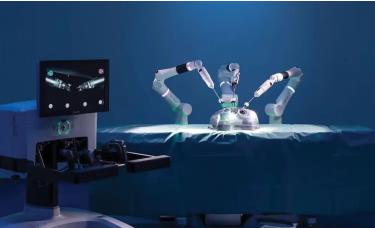
There are several soft-tissue surgical robots in the market now. Versius (CMA) has already applied for the CE mark for TORS. Hugo (Medtronic) has not. There are several Chinese “versions” of the da Vinci, both multi-arm and single-port (Kang-Duo, Edge, Toumai…) that could theoretically be used both for TORS and remote access to the neck. There is also the Korean one (Revo-i), the Japanese (Hinotori)…
Some Remote Access techniques for neck procedures existed before surgical robotics and were “robotized” later. Some were described as robotic from the beginning. Main approaches today are axillary, bilateral axilo-breast (BABA), retroauricular and transoral/transvestibular. Those are endoscopic surgical techniques usually performed with the da Vinci. But here the description is more complex. Some are percutaneous (with gas insufflation), and some are performed raising a flap. Some can be performed with a Single-Port, but some require a multi-arm device (see my 2020 review with Kyu Eun Lee).
The Medrobotic Flex is one of the discontinued systems. It was designed for an endoluminal approach (and approved for transoral, transanal, and transvaginal approaches). So even though there are now specific GI endoluminal and lung endoluminal devices, some of them might be useful for certain procedures on the Upper Airway. There is yet a technical limitation with current devices for glottic surgery (both oncologic and phonomicrosurgery). The Amarov robot is a theoretical option, but a flexible robot (like those designed for an endoluminal approach) will probably do better.
Microsurgery devices (they are really used for super-microsurgery) could also be used in head and neck surgery (see our testing of Symani).
Ear surgery is a different world with two distinct areas.
Endoscopic middle ear surgery has gained popularity in recent years. As an endoscopic surgery, it can be theoretically robotized (telemanipulated). There is room for improvement as it is a one-handed surgery (the surgeon holds the endoscope with the other hand). Options are just a robotized endoscope holder (remember AESOP…), or the full set (the idea of Zentact Robotics).
The other area is cochlear implant surgery. Two different parts have been approached with robotics. One is the drilling. After years of research starting in Switzerland, Hearo is already available in the market. The other part is the slow insertion (see Iota Robot).
Endoscopic Sinus Surgery and Cranial Base Surgery are still largely unexplored.
In summary, Otorhinolaryngology–Head and Neck Surgery includes a variety of different surgical procedures, difficult to classify in a particular area, While TORS and Robotic Remote Access Neck Surgery are already established standard procedures, others are under active research and development in the area of robotics.
J Granell. May 11, 2025