WELCOME TO HEAD & NECK ROBOTIC SURGERY
Advancing minimally invasive surgery with cutting-edge robotic systems for safer, faster, and more effective treatments.

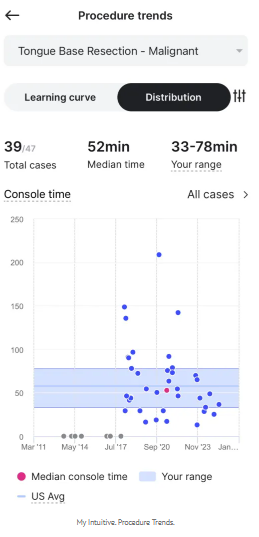
Robotic-assisted surgery with systems like da Vinci has transformed how surgeons operate, learn, and improve. Beyond enhanced precision and ergonomics, one of the most powerful recent developments is data-driven surgical coaching — a system that uses recorded surgical video and objective performance metrics to help surgeons refine their technique.
From Recording to Insight: The Basics
Every da Vinci procedure generates rich data:
These recordings become the foundation for coaching: instead of relying only on memory or subjective review, surgeons and their teams can revisit actual procedural moments with precision, frame-by-frame if needed, to analyze what happened and why.
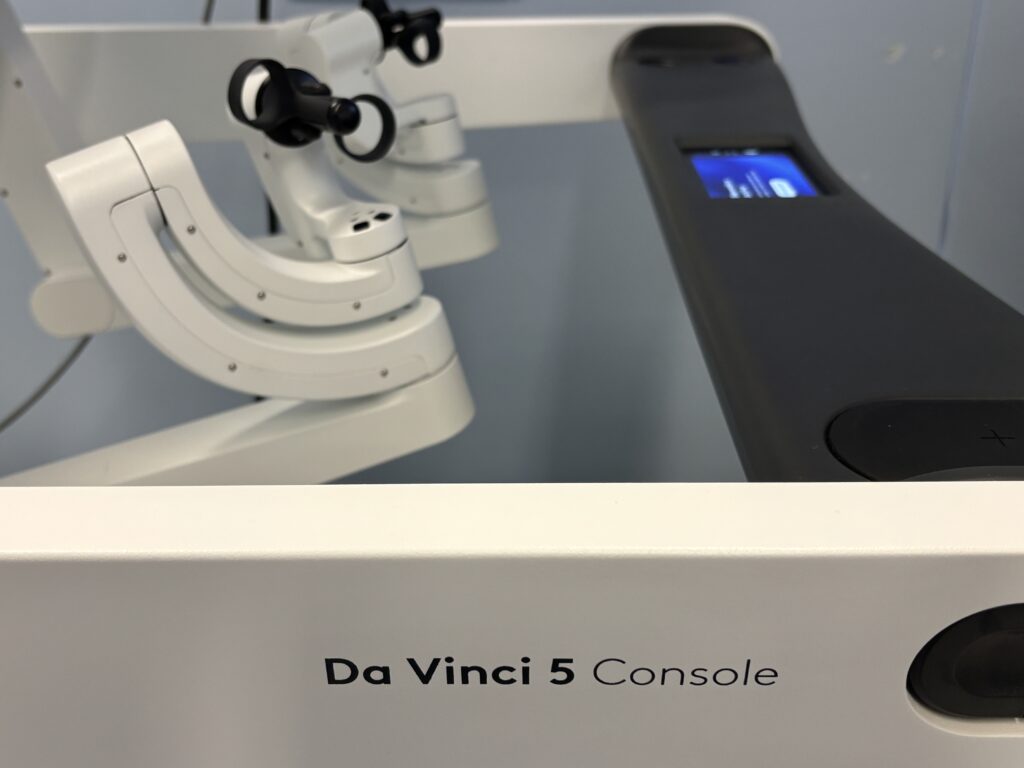
The platform My Intuitive+ — the digital coaching suite currently integrated with the latest da Vinci 5 system — automatically bookmarks key moments from a procedure and makes them available immediately after the case for review.
Objective Video Review Meets Performance Metrics
Traditional coaching can be time-intensive and subjective. By contrast, surgical video analytics enable:
These objective insights give surgeons a new lens on their technique — not just how they think a step went, but what the data says about efficiency, consistency, and workflow.
Where AI Fits Today — and Where It’s Still Emerging
Artificial Intelligence plays a supportive but meaningful role in these tools.
Today (Production Tools): Current digital coaching platforms leverage AI-powered video analysis to extract relevant features from recorded OR video and correlate those with system and motion data. This has nothing to do with “autonomous surgery,” but rather it is smart processing: algorithms help identify and organize key procedural moments and performance metrics for human review.
Emerging / Research Directions: Experimental AI projects (not yet marketed or regulatory-cleared) go further — for example, training machine learning models to:
These capabilities could someday provide even more automated coaching cues, but they are currently in development and not part of standard clinical tools.
How Coaching Integrates into Surgical Practice
The typical coaching workflow supported by da Vinci video tools looks like this:
This loop helps surgeons shorten learning curves, validate technique refinements, and track progress over time — all grounded in objective data, not just memory or anecdote.
J Granell. Jan 25, 2026