

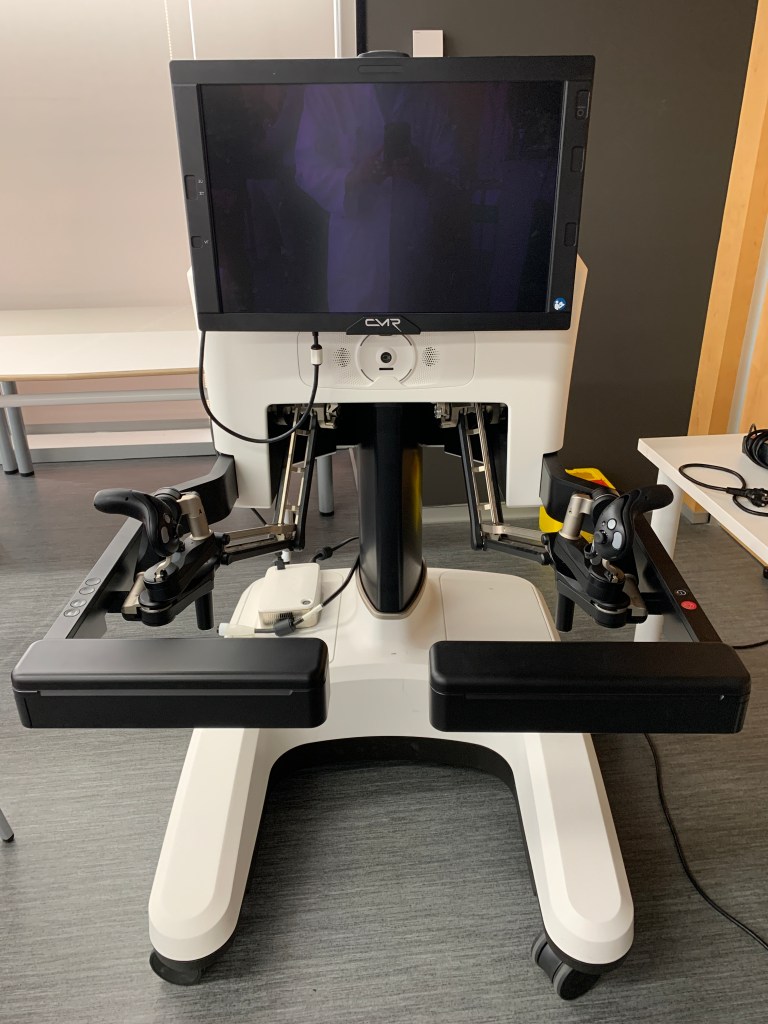
Console
The surgeon’s console exhibits two notable differences compared to the previous design. Firstly, the visual system has transitioned from a visor to a monitor. Secondly, the absence of pedals is apparent.
The surgeon now observes the surgical field through a flat monitor positioned directly in front of them while seated at the console. In order to perceive a three-dimensional effect, polarized glasses are required to ensure each eye receives distinct images. However, due to this open design, individuals in the vicinity can also view the surgical field on the console (as far as they also use polarized glasses). This differs from other devices that employ a visor design, where a double console is necessary to attain the same three-dimensional surgical field image (with just one console available for an additional surgeon). The company contends that the open design facilitates communication between the surgeon and the surgical team.
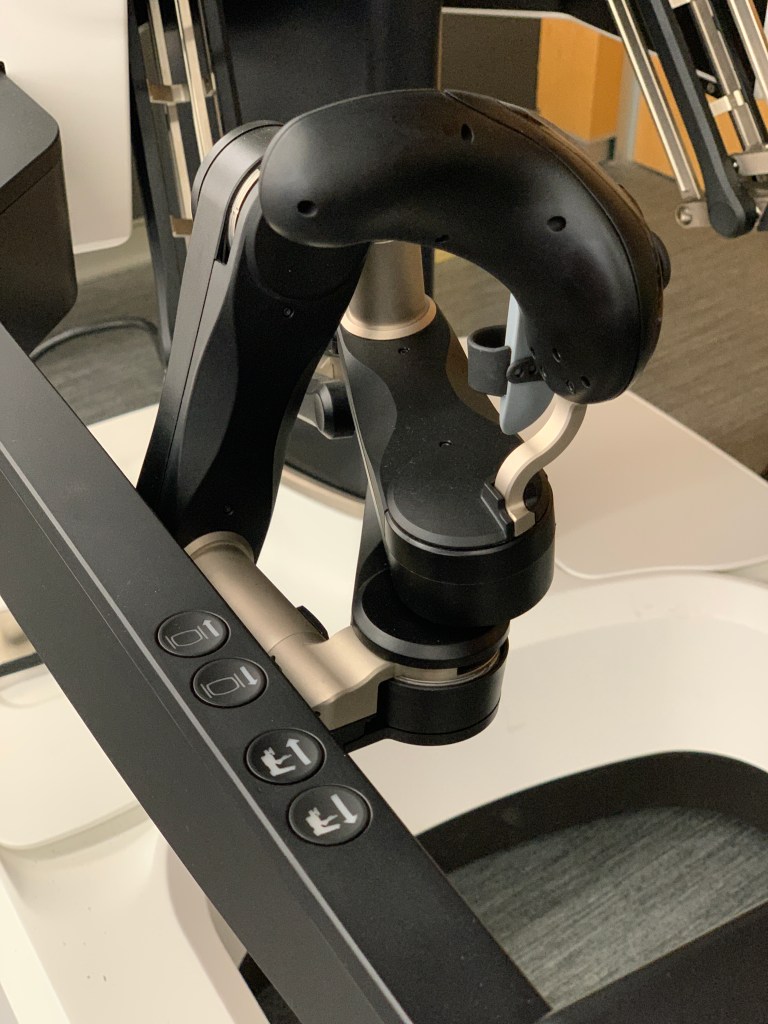
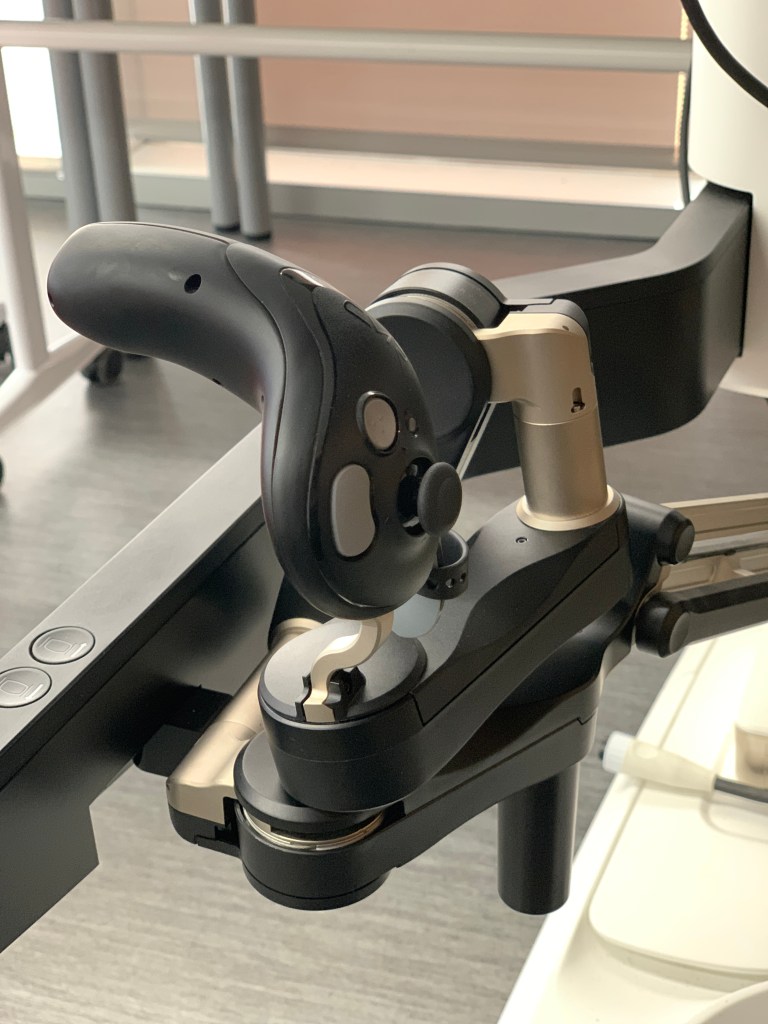
Notably, pedals are absent from the console, and all functions are controlled manually using the hands. The manipulators feature a completely redesigned interface resembling a joystick. The index finger is responsible for basic pinching movements, and wrist movements are also incorporated. The thumb controls various functions, including clutches, energy adjustments, and menu options. Consequently, surgeons accustomed to the previous devices will require some training to adapt to these changes.
More on the Versius Surgical System. Next.
J Granell. June , 2023
Notice. The Versius Surgical System has not the CE mark for Head and Neck Surgery