
On headneckroboticsurgery.com we have previously explored the role of surgical simulation in virtual environments, and how it is already changing surgical training. Robotic surgery simulators allow surgeons to practice technical skills in a safe, controlled setting, gaining fluency with robotic systems before moving into the operating theatre. They are, in many ways, the digital counterpart of the traditional anatomy lab: a bridge between theory and practice. And the software improves every day (see SimNow2 by Intuitive).
But the impact of simulation extends far beyond robotic platforms—and, in fact, long before robotic surgery even existed. Across education and training, simulation has proven to be one of the most powerful methodologies for teaching and learning, applicable to almost any discipline where skills must be practiced and refined. Medicine is no exception. From undergraduate students to postgraduate residents and continuing professional development, simulation allows learners to engage in complex scenarios, make decisions, and reflect on their performance—all without exposing patients to risk.
The Anatomy of Complex Simulation
Complex simulation is not only about the scenario itself but also about how it is constructed and delivered. A complete simulation-based learning experience usually includes:
- Pre-briefing: orienting participants to the learning objectives, rules, and environment.
- Scenario enactment: immersion in a realistic, high-fidelity situation that may involve patient actors, mannequins, or advanced virtual platforms.
- Crisis management and decision-making: the core of complex simulation, testing not only technical skills but also communication, teamwork, and leadership.
- Debriefing: the most critical step, where participants reflect on their actions, receive structured feedback, and integrate lessons into their future practice.
Simulation can reproduce both predictable clinical events (e.g., a routine robotic procedure) and unpredictable crises (e.g., sudden bleeding, airway compromise). The latter is particularly valuable in preparing healthcare professionals for high-stakes, low-frequency events that require coordinated team responses.
A Personal Note
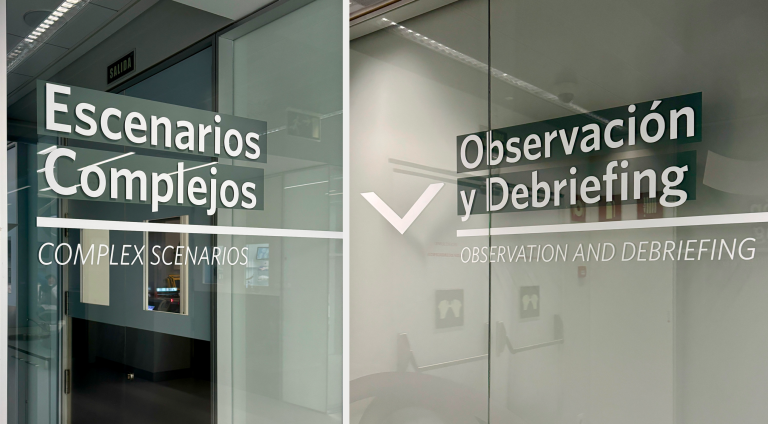
At the European University of Madrid, a comprehensive simulation facility—including a fully equipped simulated hospital—provides an ideal environment for advanced training. Within this framework, today I have completed my official accreditation as a simulation instructor. The next step is the more advanced role of simulation designer—a profile that demands not only technical and pedagogical expertise but also the ability to anticipate how learners interact with complex environments. Simulation design ultimately integrates pedagogy, technology, and clinical insight to create meaningful and transformative learning experiences.
Take-Home Message
Simulation is more than practice—it is preparation (and praeparation is everything). By embracing complex scenarios, we move toward a healthcare system where initial learning takes place in carefully designed environments that foster safer and more effective professionals. The result is a workforce that is not only more competent but also more confident—and the ultimate beneficiary is patient safety.
J Granell. September 10, 2025